Today, there are several types of toothbrushes, dental flosses, and toothpastes. As you face all these options, another choice presents itself: the brushing technique.
Just as with "cutting your vegetables," there are several techniques, but one of them yields better results. Brushing is essential for maintaining good oral health. It should disrupt, if not eliminate, the bacterial biofilm present on all surfaces of your teeth, particularly in the gingival sulcus (#3).
Effective brushing is gentle yet targeted. Sulcular brushing, in our opinion, is the best method. It will help you achieve better oral hygiene and thereby prevent dental caries and periodontal diseases.
There are four important elements to remember for mastering sulcular brushing: grip, angle, sequence, and duration.
Anatomy of a tooth
The grip
It is crucial to have a proper grip on your toothbrush to avoid damaging the gums during brushing. You should hold the brush with the fingertips, much like you would hold a pencil or a paintbrush. In addition to protecting your gums, this technique provides better dexterity and therefore greater effectiveness.
The angle
To reach the gingival sulcus during brushing, it is important to hold your toothbrush at a 45-degree angle. To do this, hold your toothbrush parallel to your teeth, with the bristles facing towards your gums. Then, gently rotate the brush at a 45-degree angle and insert the bristles under your gums. The tips of the bristles should gently reach under the gingival sulcus. Once the bristles are inserted under the gumline, make small circular motions to disrupt the bacteria present.
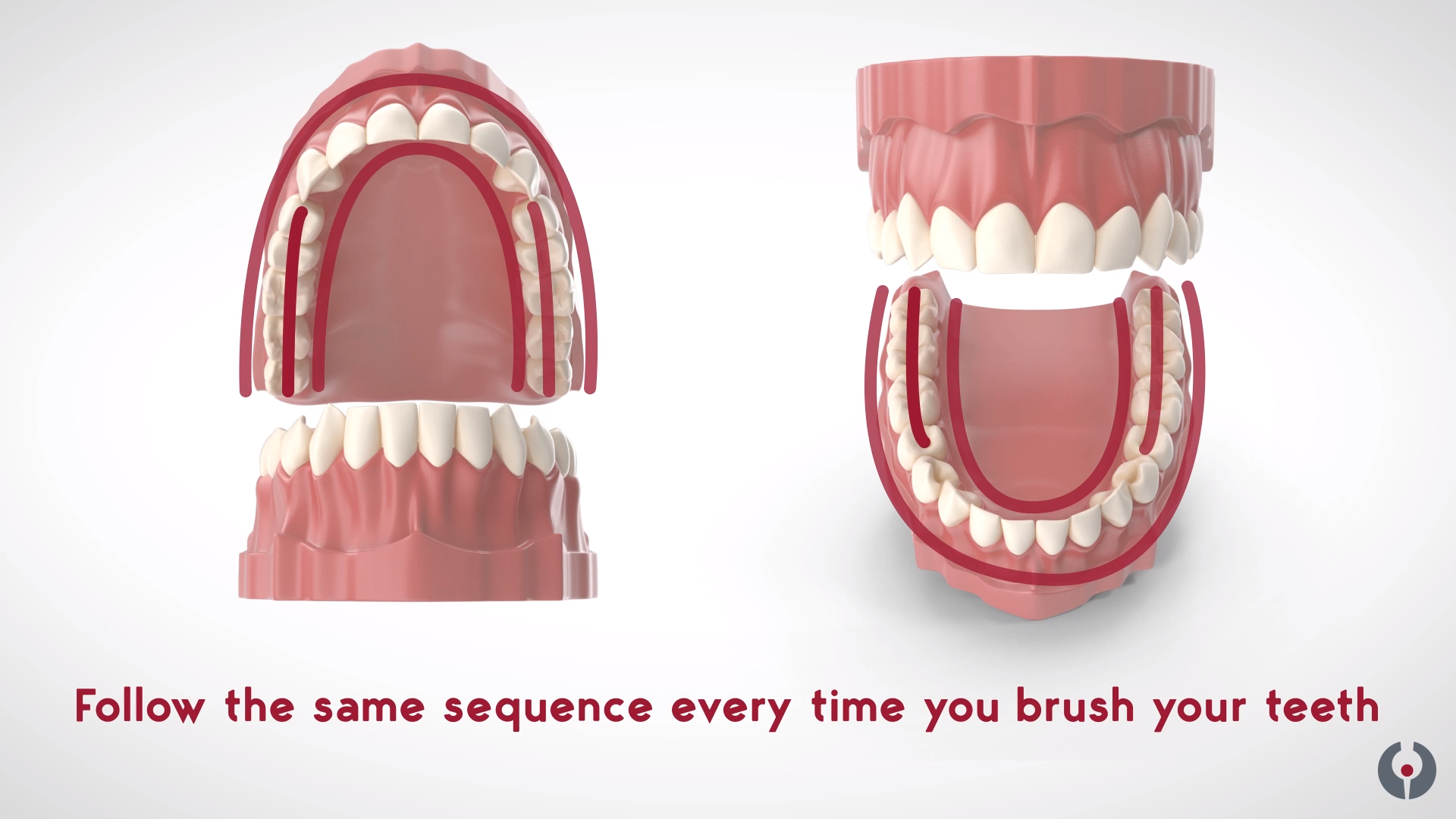
The sequence
It is important to follow a specific sequence when brushing. The sequence is crucial because we tend to move from one area to another without focusing on effectiveness and duration. As a result, we may brush some areas too much (leading to recession or abrasion) and neglect others (leading to plaque, tartar, and gingival inflammation). You should never brush the same spot twice and remember to brush the chewing surfaces as well.
The Duration
One second per tooth, or sector, of mechanical brushing action with the bristles is sufficient to disrupt the biofilm without causing wear. A sector is defined as the tooth or teeth covered by your toothbrush. It is important not to overbrush your teeth. The total duration of your brushing should not exceed 1 minute 30 seconds to 2 minutes. Tip: To count the seconds, say "hippopotamus" between each number! 1 hippopotamus, 2 hippopotamuses, 3 hippopotamuses...
The effectiveness of your brushing is more important than its frequency. We recommend brushing your teeth a maximum of two times a day. Remember to pay particular attention to how you hold your toothbrush! Vigorous brushing, too long or too frequent, can cause gum recession and abrasion, and increase tooth sensitivity.
Follow the brushing steps in the following video. Happy brushing!
Loading Comments...
We place great importance on your privacy. We use cookies to enhance your browsing experience, deliver personalized advertisements or content, and analyze our traffic. By clicking 'Accept All', you consent to our use of cookies.